NEW
Advertise on the World Cup. ⚽️ Your brand on the world's biggest stage. Learn more
NEW
Universal Ads in the UK is now live 🇬🇧 Learn more


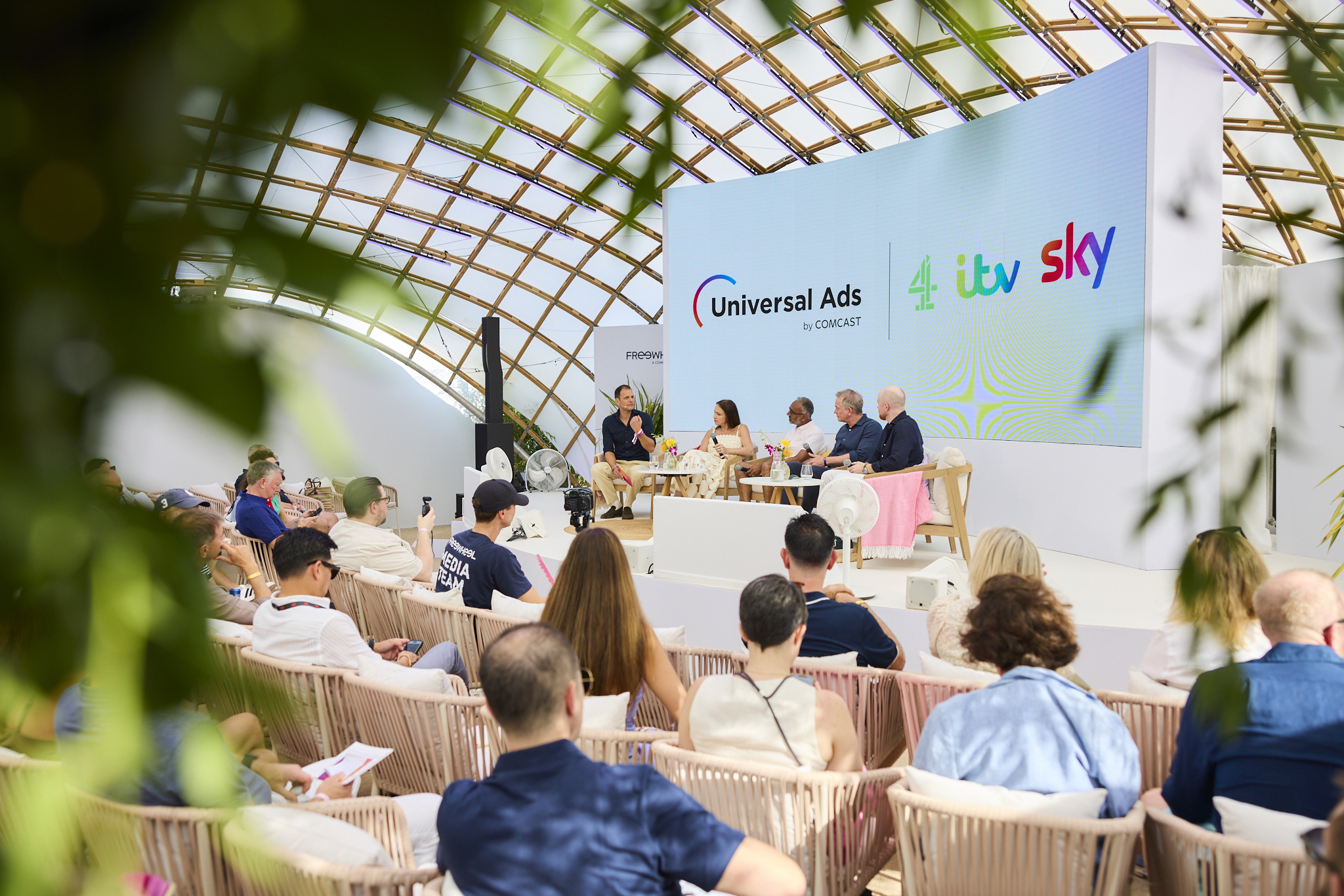
Every year, Cannes has its themes. This year, it also had the heat.
I don't think you can talk about Cannes 2026 without mentioning that just about every meeting felt like it happened on the surface of the sun. The upside? Nothing builds relationships faster than walking from meeting to meeting with your clients, all equally overheated, trying to find the next patch of shade.
Once everyone stopped talking about the weather, though, the conversations were remarkably consistent.
Across agencies, brands, publishers and technology partners, one thing became clear: advertisers aren't questioning whether TV belongs in their growth strategy anymore. They're asking why buying, measuring and scaling TV still isn't as simple as everything else they do.
Here are the four themes that kept coming up all week.
One of the biggest shifts I heard this week was around scale. Advertisers don't want to rethink their buying strategy every time they enter a new market, they want platforms that let them go from one market to many.
Historically, markets like the UK forced advertisers to choose between the quality of premium broadcast TV and the simplicity of digital buying. That's starting to change.
Universal Ads' recent self-serve launch with Channel 4, ITV and Sky is a great example of where the industry is headed: giving advertisers access to premium broadcaster inventory through tools that feel much more like buying search or social.
Just as importantly, those platforms need to account for local market requirements from privacy regulations to currency support without creating more complexity for advertisers. The goal isn't just global reach. It's making global TV buying feel simple.
Last year everyone was talking about AI. This year the conversation shifted to how it's actually getting built into workflows.
The most interesting example is agentic buying.
Technologies like Model Context Protocol (MCP) are making it possible for advertisers to connect TV buying directly into the AI tools they already use. Instead of logging into multiple platforms and manually building campaigns, buyers can increasingly rely on AI agents to assemble, negotiate and activate campaigns based on their goals, audience and budget.
Humans still set the strategy. AI handles much of the execution.
That shift has the potential to remove a tremendous amount of friction from TV buying and make premium inventory dramatically more accessible.
For years, TV has been viewed primarily as a brand-building channel. That's changing quickly.
The expectation now is simple: if marketers can measure search and social, they expect to measure TV the same way.
Throughout Cannes, measurement came up in almost every conversation. Advertisers want real-time outcomes, trusted attribution and proof that TV is driving business results, not just awareness.
Integrations with leading mobile measurement partners are helping make that possible by allowing advertisers to measure installs and post-install events directly within the platforms they already use.
The result is that TV is increasingly being evaluated alongside digital channels using the same performance metrics marketers already trust. That's a major shift and one that's making TV a much more compelling growth channel.
Live sports dominated conversations this year, from the FIFA World Cup 2026™ and Milan Cortina Winter Olympics to MLB and other major leagues.
What's changing isn't the value of those moments. It's who gets access to them.
Historically, premium live sports inventory was reserved for the biggest advertisers with the biggest budgets.
Today, self-serve platforms are opening those opportunities to far more brands through flexible buying models and lower barriers to entry.
That means more advertisers can show up alongside premium content without needing massive upfront commitments and they're seeing results. One apparel advertiser, for example, achieved a 31% cart-to-purchase conversion rate, outperforming apparel ecommerce benchmarks.
When I think back on the conversations from Cannes, the common thread wasn't AI, measurement or sports.
It was simplicity.
Advertisers want TV to work the way the rest of their marketing works. They want to launch campaigns faster, measure outcomes more clearly, and scale across markets without adding complexity.
The good news is that's exactly where the industry is heading.
Premium TV isn't trying to become digital. It's becoming easier to buy, easier to measure, and easier to scale without sacrificing the quality and impact that made it valuable in the first place.
That's a win for advertisers, and it's exactly what we're focused on at Universal Ads: removing the barriers that have historically made TV harder than it needs to be so every advertiser not just the biggest ones can use premium TV as a true growth channel.
FREQUENTLY ASKED QUESTIONS
Q: What were the major TV advertising trends at Cannes Lions 2026?
Four themes dominated premium TV advertising discussions at Cannes Lions 2026: global advertisers seeking simplified self-serve access to broadcaster inventory, the rise of agentic AI buying powered by Model Context Protocol (MCP), outcome-based measurement that positions TV alongside search and social, and expanded access to live sports inventory for brands of all sizes.
Q: What is agentic buying in TV advertising?
Agentic buying refers to the use of AI-powered, automated workflows to plan and purchase TV advertising. Enabled by technologies like Model Context Protocol (MCP), agentic buying lets advertisers plug TV campaign creation directly into the AI tools they already use—so launching a TV campaign can be as simple as prompting an AI assistant.
Q: How is TV advertising becoming more measurable?
TV platforms are integrating with leading mobile measurement partners (MMPs), allowing advertisers to track installs and post-install events from TV campaigns within the same dashboards they use for search and social. This lets marketers evaluate TV using the same attribution frameworks and outcome-based metrics they already trust, making TV a measurable performance channel rather than a brand-only buy.
Q: Can small and mid-sized brands advertise during live sports in 2026?
Yes. Platforms like Universal Ads now offer self-serve, programmatic access to live sports inventory—including major leagues and tentpole events like the 2026 FIFA World Cup and Milan Cortina Winter Olympics—with no minimum spend requirements. This removes the upfront deal and large budget barriers that historically limited live sports advertising to the biggest brands.
Q: How are global advertisers accessing premium TV inventory without relying on traditional buying processes?
New self-serve platforms are giving global advertisers direct access to premium broadcaster inventory through interfaces that resemble search and social buying tools. These platforms are designed with privacy in mind to address regional requirements such as local currency support, and market-specific workflows—so brands can run TV campaigns at scale without needing dedicated media-buying teams or upfront broadcast deals.
Q: What is Model Context Protocol (MCP) and why does it matter for TV advertising?
Model Context Protocol (MCP) is an API-first, standardized connector framework that allows different software tools to communicate. In TV advertising, MCP enables buying platforms to integrate directly with the AI environments advertisers already use, so campaign creation and launch can happen inside familiar AI-powered workflows rather than requiring separate, dedicated ad-buying platforms.

.svg)